
I am a possessed archivist. I keep record of all kinds of things: my expenses, my books, my art works, my travels and also of people I meet. In my extensive diary I write details. My addiction to archives is worse than alcoholism. During the time I spent keeping and processing data, I could have made hundreds of paintings. Feeling neither hunger nor pain, I can work like mad for hours or days.
I keep those data secret, but in some installations my obsession comes to the surface. For "712 Borders" I used the records of all my crossings of national borders: checkpoint, date, time, place of departure, destination, travelling companion, vehicle, and so on. In my diary and in my memory I found the stories I wanted to add.
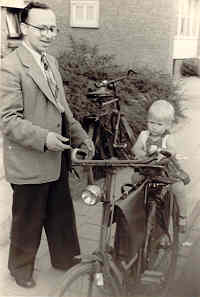
I crossed my first border when I was two years old, in a child seat on my father's bike: from our Maastricht home to Belgium and back. After studying maps at the age of seven, I drew many imaginary countries. Their borders were important: behind them was the unknown. From the age of 20 I crossed borders on my own. This was not difficult, since Holland is a small country; former foes are friends now and travelling the 555 kilometers from Amsterdam to Paris is much easier and faster than the 86 kilometers from Jerusalem to Amman. But crossing a border changes my identity: from a citizen into a foreigner, or, in the case of Israel, into a non-Jew.
When I decided to expose my border archive in Musrara, I had records of 712 crossings; further research into archives, memory and maps brought 15 more. For instance, when travelling to Moscow and Kiev by train in December 1991, I did not realize I was crossing brand-new borders; the Soviet Union was dissolved three days ago.
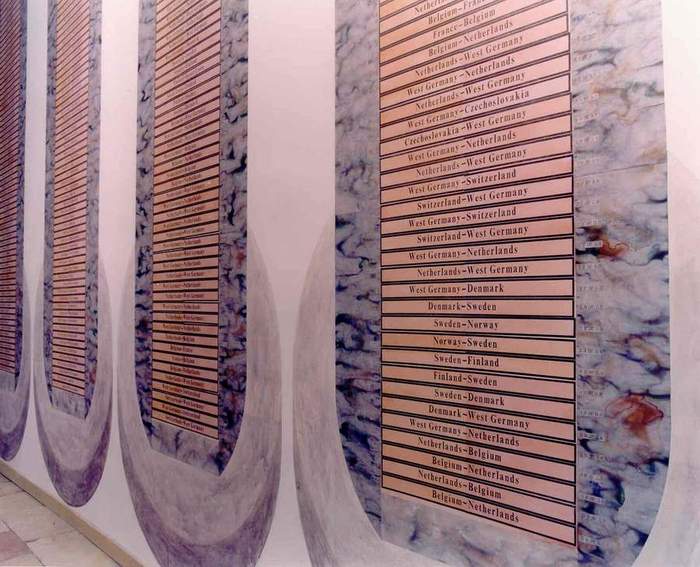
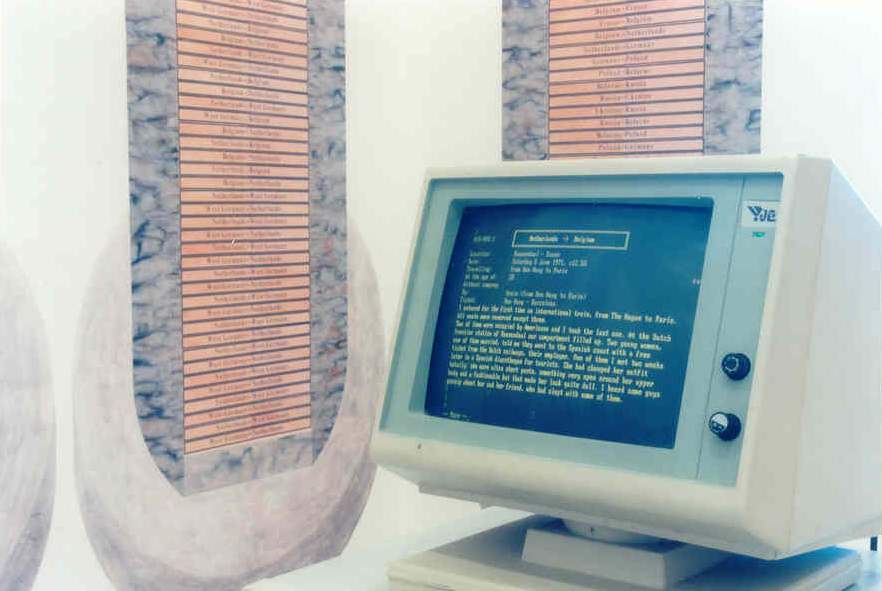
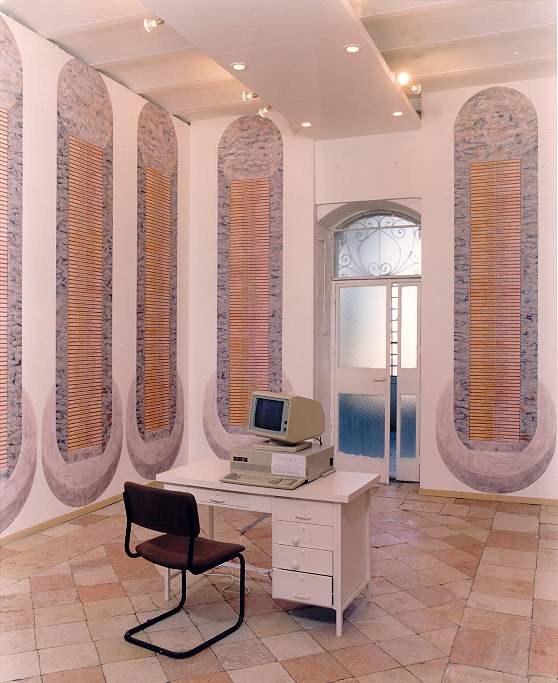
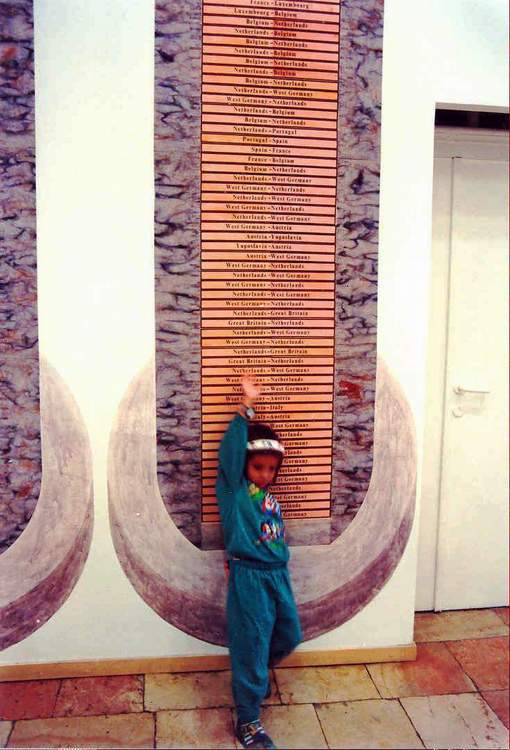
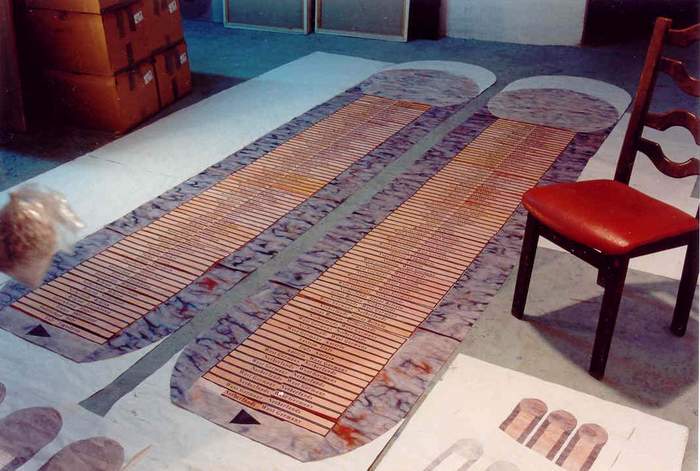
Nine painted poles contained the full border list in chronological order, with border names, numbers and dates. On the opposite wall, four borders were shown in full detail, including a short story related to that crossing. Other details could be found on leaflets and all details were accessible in the computer there.
See a list of all border crossings and stories
This list is technically outdated; data have to be updated.
Pictures are missing. I am working on it